
Oct 22, 2026
Safe Operating Procedures for Construction Stone Crushing Equipment
Construction stone crushing equipment plays an important role in producing aggregates for road construction, foundations, drainage systems, landscaping, and other building projects.
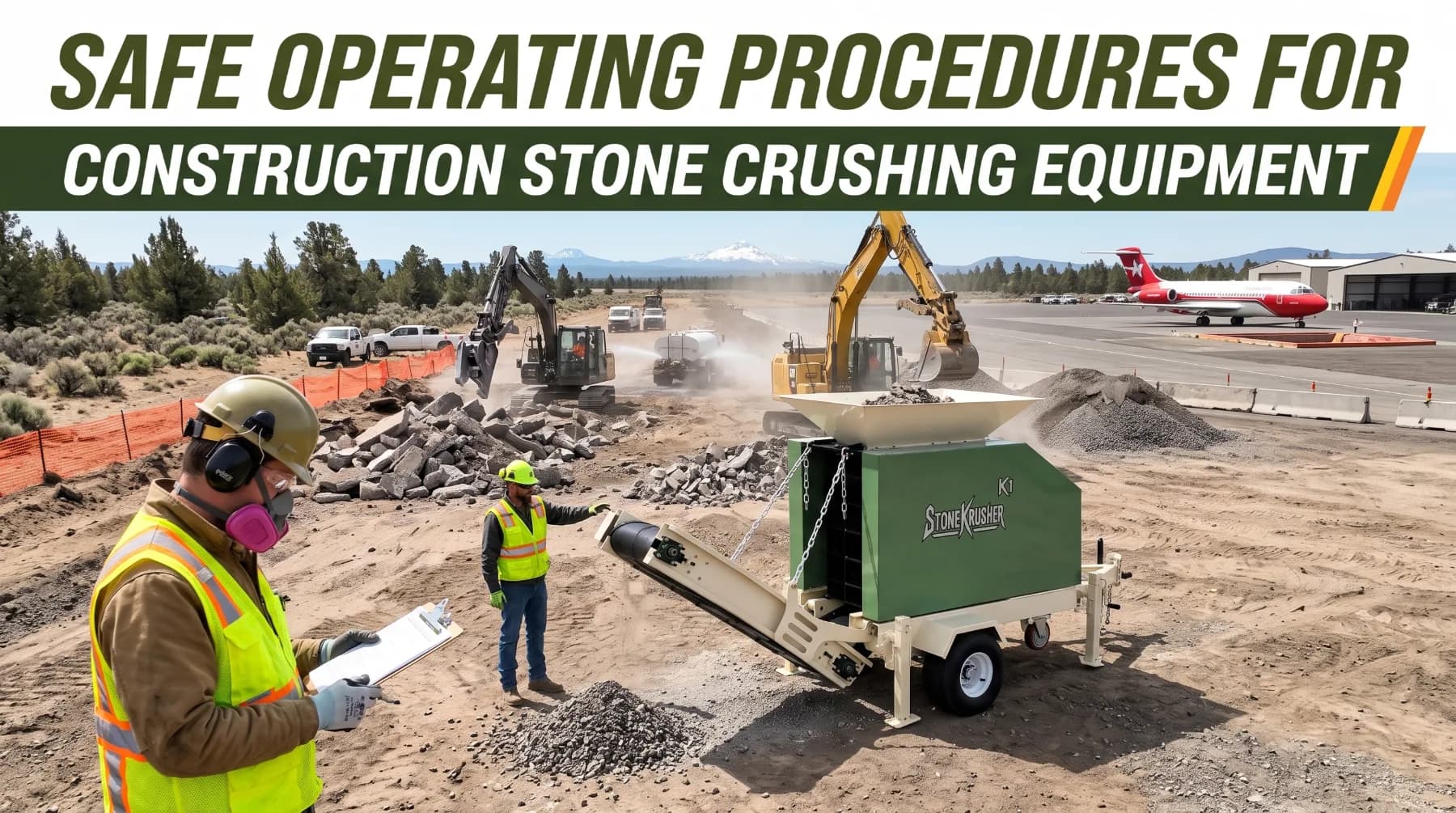
Construction stone crushing equipment plays an important role in producing aggregates for road construction, foundations, drainage systems, landscaping, and other building projects. These machines break large rocks into smaller, usable materials through mechanical crushing processes. Although crushing equipment can improve material processing efficiency, it also introduces serious workplace hazards involving moving components, heavy materials, flying fragments, dust, noise, and unexpected machine movement.
Safe operation depends on more than starting the crusher and feeding material into the hopper. Operators must understand the machine's operating limits, recognize potential hazards, follow established site procedures, and maintain clear communication with other workers. Proper preparation, routine inspections, controlled material feeding, and effective emergency procedures help reduce the risk of injuries and equipment damage. Every crushing operation should follow the manufacturer's instructions, applicable safety regulations, and the specific requirements of the worksite.
Preparing the Crushing Work Area
Before operating a stone crusher, workers should inspect the surrounding work area for hazards that could affect machine stability, access, and safe movement. The ground must be suitable for the equipment's weight and operating loads, particularly when using mobile crushers or machines positioned near excavation edges. Uneven ground, loose soil, and unstable surfaces can affect machine positioning and may increase the risk of movement or tipping. Equipment should be set up according to the manufacturer's requirements.
The crushing area should provide sufficient space for material delivery, processed aggregate removal, maintenance access, and emergency response. Loading vehicles need clear routes to approach the feeding point without interfering with other machinery or pedestrian traffic. Designated travel paths and exclusion zones help separate workers from moving equipment. Barriers, warning signs, and access restrictions should be established wherever people could enter a hazardous operating area.
Material stockpiles also require careful placement. Large rocks, loose aggregate, and unstable piles can create falling-material hazards if stored too close to the crusher or loading routes. Operators and site supervisors should ensure that stockpiles do not obstruct visibility, emergency exits, access points, or equipment movement. Suitable space should remain available for loaders, excavators, and haul vehicles to operate without unnecessary congestion.
Weather and environmental conditions can affect the work area throughout a shift. Rain may soften the ground, while wind can carry dust toward workers, nearby roads, or surrounding properties. Poor lighting can make it harder to identify obstacles and moving vehicles. Site personnel should reassess conditions when changes occur and adjust the operating arrangement or suspend work if the area no longer supports safe crushing operations.
Responding to Blockages
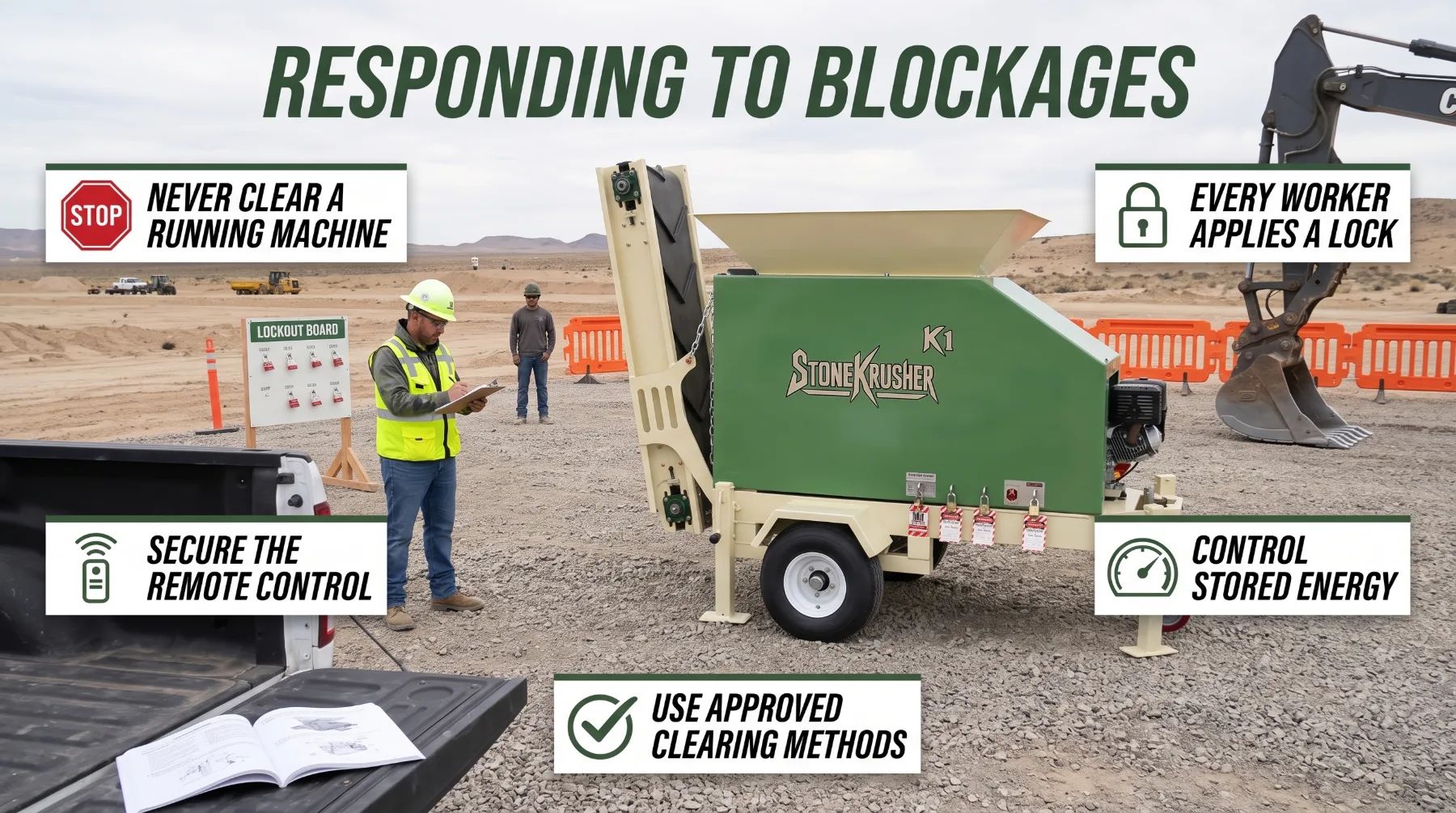
Blockages can occur when oversized rocks, irregular material, or accumulated debris prevent normal movement through the crushing chamber. A blockage may place excessive strain on mechanical components and cause material to shift unexpectedly. Attempts to clear the obstruction without proper preparation can expose workers to crushing, entanglement, falling-material, and stored-energy hazards.
When a blockage develops, operators should follow the manufacturer's prescribed shutdown procedure and notify the responsible personnel. The machine must be stopped, isolated from all relevant energy sources, and secured against unexpected startup before anyone begins clearing the obstruction. Lockout/tagout or the applicable hazardous-energy control procedure should be followed, including verification that the equipment is in a safe state. Simply pressing the emergency stop or switching off the engine may not adequately control every hazardous energy source.
Stored energy requires particular attention during blockage removal. Hydraulic pressure, tensioned belts or springs, rotating components that have not fully stopped, suspended equipment, and rocks held under pressure may release energy unexpectedly. Material inside the chamber can shift or fall when the obstruction is disturbed. Workers must follow the manufacturer's instructions for releasing or supporting these hazards and should never stand beneath suspended components or unstable material.
Only trained and authorized personnel should perform blockage-clearing work using approved methods and equipment. Hands and body parts must remain outside crushing and pinch points, and improvised methods should not be used to force material through the chamber. Once the blockage has been removed, workers should inspect the affected components, replace guards, account for personnel and tools, and confirm that all safety controls are restored before following the approved restart procedure.
Feeding Material Safely
Safe material feeding begins with understanding the crusher's permitted feed size, material characteristics, and operating capacity. Rocks that exceed the manufacturer's specified dimensions may become lodged in the hopper or crushing chamber. Reinforcing steel, scrap metal, wood, and other unsuitable debris can also interfere with crushing, damage components, or create unpredictable material movement. Incoming material should be assessed before feeding to identify items that the machine is not designed to process.
The feeding method must match the crusher's design and the equipment used to deliver material. Operators should use approved loading equipment and follow the manufacturer's guidance for positioning material over the hopper. Feeding too quickly or delivering large, irregular loads can overwhelm the crushing chamber and interrupt material flow. A steady, controlled feed helps maintain consistent processing while reducing the likelihood of blockages and sudden material movement.
Communication between the crusher operator and the loader or excavator operator is essential when several machines work together. Workers should agree on signals, radio procedures, and designated positions before feeding begins. Only authorized personnel should direct loading activity, and operators must remain aware of people near the hopper and discharge area. Anyone who enters a designated exclusion zone should trigger the appropriate stop-work response under site procedures.
Workers must never reach into the hopper, push material toward the crushing chamber by hand, or attempt to reposition lodged rocks while the machine is operating. Tools and feeding methods should only be used where specifically approved by the manufacturer and supported by safe procedures. When material flow becomes irregular, operators should follow the prescribed response instead of attempting to maintain production through unsafe intervention.
Managing Dust and Flying Debris
Stone crushing can generate airborne dust as rocks break apart and aggregate moves through the feed, crushing, and discharge areas. Fine particles may affect respiratory health, while dust accumulation can reduce visibility and interfere with nearby machinery. Dust control should be planned according to the material being processed, the crusher design, site conditions, and applicable environmental and occupational requirements.
Water sprays, misting systems, extraction equipment, and suitable enclosure arrangements may help reduce airborne dust when properly designed for the operation. Water application must be compatible with the crusher and the material being processed. Workers should check that dust suppression equipment functions correctly and that water or slurry does not create slippery surfaces, drainage problems, or other hazards around the machine.
Flying rock fragments can injure workers who stand too close to the hopper, discharge point, or other exposed areas. Suitable guarding, barriers, and exclusion zones should prevent unnecessary access to these locations during operation. Operators should position themselves at designated stations and avoid looking directly into hazardous openings. If a guard or barrier cannot adequately contain material, the operation should be reassessed before production continues.
Personal protective equipment should supplement engineering and administrative controls rather than replace them. Depending on the risk assessment, workers may need suitable eye and face protection, hearing protection, safety footwear, hard hats, gloves for appropriate tasks, and respiratory protection. Respiratory protection must be selected and used in accordance with the identified exposure risks and applicable requirements. Workers should also understand the effects of prolonged noise exposure and follow established hearing conservation measures where required.
Inspecting Guards and Safety Controls
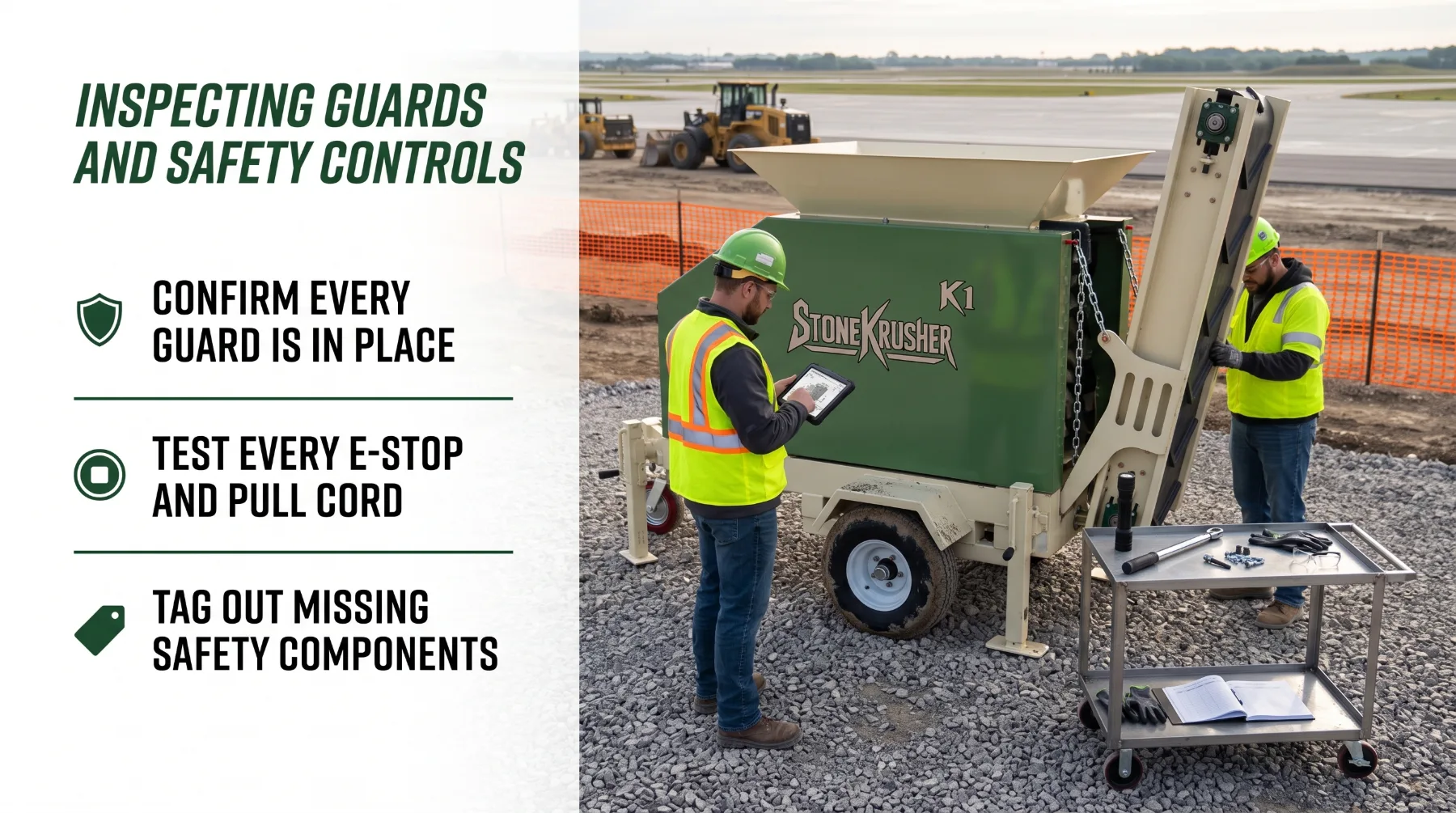
A pre-start inspection should confirm that the crusher's protective components and safety systems are installed, functional, and appropriate for operation. Depending on the machine design, inspections may cover crushing chamber guards, belt and pulley covers, access doors, warning devices, emergency stops, and interlocks. These components help prevent contact with dangerous moving parts and provide ways to stop equipment when an unsafe condition develops.
Operators should also inspect visible mechanical and hydraulic components for damage or abnormal conditions. Loose fasteners, worn belts, damaged hoses, fluid leaks, unusual wear, and missing covers may indicate problems that require attention before operation. Feed hoppers, discharge areas, and accessible structural components should be checked for material buildup or damage that could interfere with normal operation. Inspection procedures must follow the manufacturer's instructions and should never require workers to enter hazardous areas while the machine is running.
Emergency stops and other safety controls should be verified using the approved testing procedure. Workers need to know where these controls are located, how to activate them, and what actions are required after an emergency stop. An emergency stop is not a substitute for isolating hazardous energy before maintenance. Restarting should only occur after the cause of the stop has been identified and the equipment has been confirmed safe to operate.
If a guard, interlock, emergency stop, or other critical safety component is damaged or not functioning correctly, the equipment should not be operated until the defect has been addressed. Safety devices must never be bypassed to maintain production. Defects should be reported to the responsible supervisor, and repairs should be completed by qualified personnel using approved procedures before the crusher returns to service.
Maintenance and Operator Training
Preventive maintenance helps keep stone crushing equipment operating safely and reliably. Inspection requirements vary by crusher type, but common areas include wear plates, crushing components, belts, pulleys, bearings, motors, hydraulic systems, electrical connections, guards, and safety controls. Excessive wear, loose fasteners, unusual vibration, overheating, and fluid leaks should be reported and assessed before they lead to a more serious failure.
Maintenance must be carried out according to the manufacturer's schedule and technical instructions, particularly for crushing equipment operating on construction sites. Regular inspections help identify wear on crushing components, conveyor systems, drive mechanisms, and other parts exposed to heavy workloads. Before servicing, workers should isolate relevant energy sources, secure components against movement, and verify that hazardous energy has been controlled. Equipment should not be cleaned, adjusted, lubricated, or repaired while moving parts create an exposure risk unless a specific manufacturer-approved procedure expressly addresses the task and its safeguards. Replacement parts and lubricants should meet the machine's requirements to support reliable crushing performance and safe material handling.
Operator training should cover the crusher's controls, permitted materials, feed limits, startup and shutdown procedures, emergency response, and the hazards associated with moving components and stored energy. Workers should also understand exclusion zones, communication protocols, dust control measures, and the correct reporting process for equipment defects. Training should be appropriate to the machine and each worker's assigned responsibilities, with additional instruction provided when equipment or procedures change.
Clear maintenance records and shift handovers can improve the consistency of safety checks. Operators should document defects, unusual operating conditions, completed inspections, and maintenance activities so that incoming personnel understand the machine's condition. Supervisors should verify that reported issues are addressed and that only authorized personnel return equipment to service. Combining preventive maintenance, effective training, and consistent supervision helps reduce unplanned downtime while supporting safer crushing operations.
Conclusion
Safe operation of construction stone crushing equipment depends on thorough site preparation, functional guards and safety controls, controlled material feeding, effective dust management, and strict procedures for handling blockages. Operators must understand the machine's limits, maintain clear communication with other workers, and keep people away from hazardous operating areas. Before maintenance or obstruction removal, all relevant energy sources must be isolated and verified safe according to approved procedures. Regular inspections, qualified maintenance, and task-specific training help prevent avoidable incidents, protect workers, and maintain reliable aggregate production throughout construction projects.
Frequently Asked Questions
What should be checked before starting a stone crusher?
Inspect guards, emergency stops, access covers, feed equipment, and the work area. Confirm every guard is installed and secure, test each emergency stop and conveyor pull cord, and check start-up alarms, warning lights, ladders, and platforms. Walk the exclusion zone to confirm no one is inside, and verify water sprays are connected. Keep the crusher out of service if any guard or safety control is missing or damaged.
Can oversized rocks be fed into the crusher?
Only material within the specified feed size limit should enter the machine. Oversized rocks and slabs can bridge across the hopper or jaw, cause blockages, and throw fragments from the feed area. Break oversize before feeding with a hydraulic breaker in a controlled area, and cut exposed reinforcing steel from recycled concrete before it reaches the hopper.
How should operators clear a blockage?
Stop and isolate the equipment, shut down the crusher and connected equipment, remove the key, and have every worker apply a personal lock and tag. Secure remote controls, relieve hydraulic pressure, and block raised components. Use the manufacturer's approved clearing methods, such as hydraulic chamber-clearing systems, and never reach into the hopper or chamber while the machine can move.
Why is dust control important?
Rock and concrete often contain crystalline silica, which causes silicosis, lung cancer, and other serious diseases when inhaled over time. Dust also reduces visibility for equipment operators and can drift onto nearby properties. Use water sprays at the source, keep haul roads wet, assess exposures with a qualified professional, and provide respirators suited to the exposure level.