
Oct 10, 2026
Trencher Chain Design and Soil Cutting Performance
Trenching performance can change significantly when ground conditions shift along the same project. A chain equipped for loose soil may cut efficiently through sandy topsoil but struggle in compacted gravel or clay, causing slower progress, excessive vibration, packed spoil, and faster tooth wear.
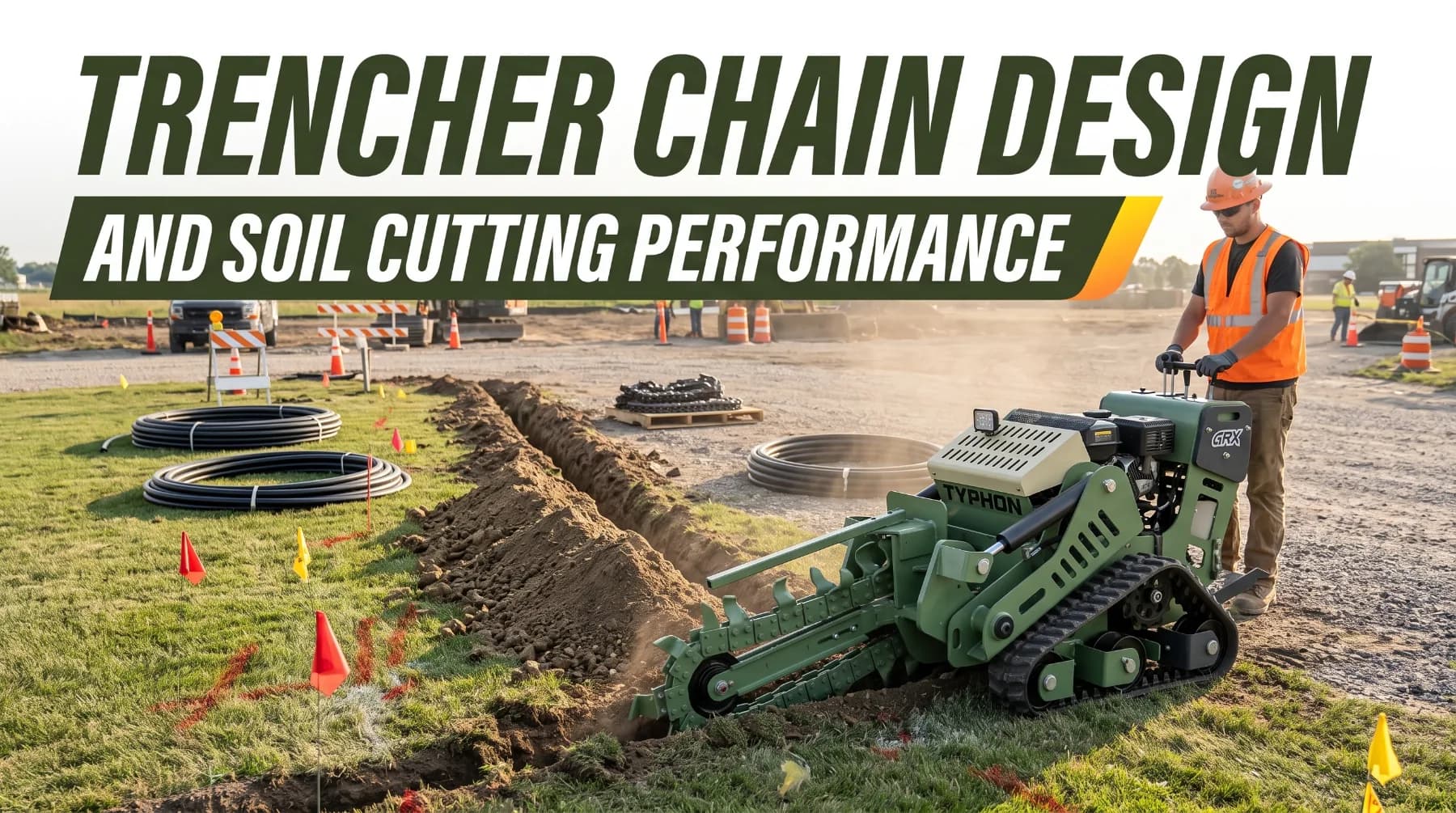
Trenching performance can change significantly when ground conditions shift along the same project. A chain equipped for loose soil may cut efficiently through sandy topsoil but struggle in compacted gravel or clay, causing slower progress, excessive vibration, packed spoil, and faster tooth wear. Continuing with an unsuitable chain can also increase the risk of damaged cutting components and unplanned downtime.
The cutting chain is responsible for penetrating the ground and removing material as the trencher moves forward. Chain design, tooth style, tooth condition, tension, and ground hardness all affect cutting speed, trench quality, and component life. Matching the chain configuration to the soil and material being excavated helps the machine maintain more consistent performance across changing site conditions.
Before starting a trenching job, operators should assess the expected ground conditions and select a chain and tooth configuration suited to the material. Chain tension should be checked according to the manufacturer's specifications, while worn or damaged teeth should be replaced before they affect cutting performance. Regular inspection and proper chain selection can help produce cleaner trenches, reduce component wear, and limit interruptions during utility, drainage, irrigation, and landscaping work.
Chain Arrangement
Tooth style is only one part of trench chain design. Tooth pattern, spacing, and the chain's path around the boom all affect how consistently material is removed. The pattern and angle of the teeth determine how evenly they cut across the trench width, while tooth spacing affects how much material stays in contact with the cutting surface. Closer spacing increases the number of teeth working at once, while wider spacing can help reduce packing in sticky soils. The chain travels from the drive sprocket down the boom, around the end idler, and back upward, continuously carrying excavated material toward the surface.
A well-matched chain arrangement helps maintain steady cutting across the trench face and supports smoother machine progress. Gaps in the tooth pattern can leave ridges along the trench walls or floor, while spacing that does not suit the soil can increase material buildup and reduce efficiency. Matching the chain arrangement to the ground conditions helps the trencher maintain a consistent cut and follow the planned trench line more effectively.
Key takeaway: The arrangement and movement of the chain influence how material is removed, and a suitable design helps maintain steady cutting action as the trencher advances.
Chain Teeth and Cutting Action
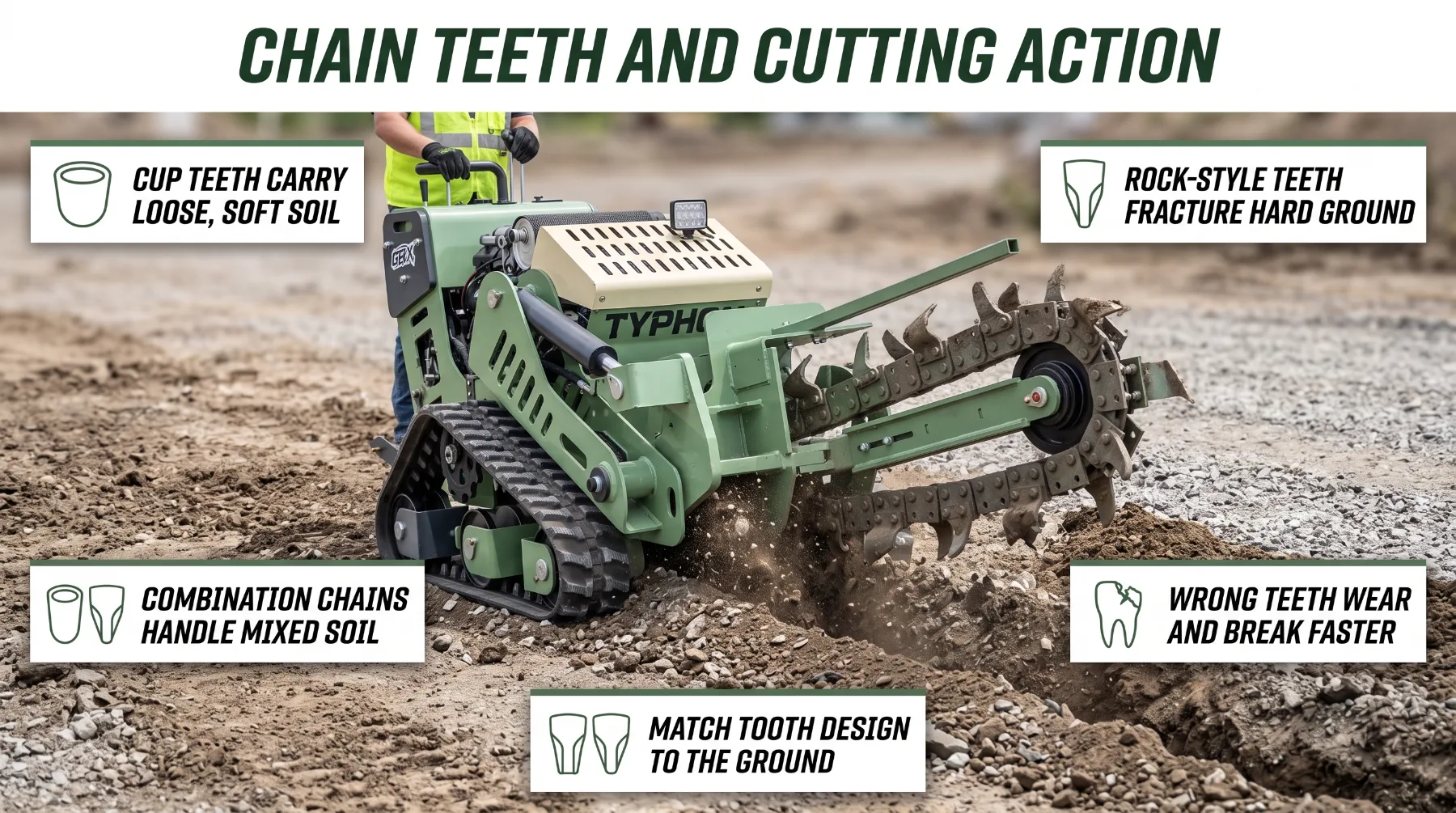
The cutting teeth perform the main trenching work as the chain moves around the boom. Each tooth engages the ground, breaks material loose, and helps carry the spoil upward and out of the trench. Tooth design affects how effectively the chain penetrates different types of soil and ground conditions.
Different tooth styles are suited to different materials. Cup teeth work well in loose or softer soils and help carry material away efficiently, while pointed rock-style teeth are designed for more compacted, gravelly, frozen, or rocky ground. Combination chains can use different tooth types to handle changing conditions. Matching the teeth to the ground helps maintain steady cutting performance and avoid unnecessary strain.
-
Tooth Design: Determines how the cutting chain penetrates and breaks the ground.
-
Cup Teeth: Suited to loose and softer soils where efficient material removal is important.
-
Rock-Style Teeth: Concentrate cutting force to penetrate harder or more compacted material.
-
Combination Teeth: Mix different tooth styles for projects with varied ground conditions.
-
Ground Matching: Select tooth types based on soil hardness, material condition, and trenching requirements.
Key takeaway: Cutting teeth determine how the chain penetrates and breaks soil, so match the tooth design to the ground conditions and cutting requirements of the job.
Soil Conditions
No single trencher chain performs equally well in every type of ground. Loose or sandy soil usually cuts easily but may require effective soil carry-out to keep the trench open. Compacted ground needs teeth that can penetrate and break dense material, while clay can cut well when moist but may stick to the teeth and pack into the chain. Gravel and rocky soil increase tooth wear and impact loads, while mixed material can require a combination of cutting styles as conditions change along the route.
Using one aggressive chain for every job can reduce performance rather than improve it. A rock-style chain may move soft soil inefficiently, while a soft-soil chain can wear rapidly or become damaged in rocky ground. Check the route before digging and identify changes in soil type, rock content, and moisture. Conditions such as dry or damp clay can behave very differently, so chain selection should account for the actual ground conditions along the trench.
Key takeaway: Different soils place different demands on the cutting chain, so evaluate ground conditions along the route when selecting or operating a trencher.
Trenching Depth and Width
Every installation has its own trench requirements. An irrigation lateral may need a shallow, narrow cut, while a water service or electrical conduit may call for greater depth. The chain and boom configuration determine what dimensions the machine can produce.
Two features shape trench size:
-
Depth: Set by the boom length and how far it can be lowered into the ground.
-
Width: Set mainly by the chain and tooth width.
Match the cutting setup to the project before you mobilize. Confirm the required depth and width from the installation specifications, then check the trencher's boom and chain against those numbers. A chain that cuts too wide removes extra soil and adds backfill time. A chain that cuts too narrow may not leave enough room for pipe, conduit, or bedding material. Check depth at regular intervals during work, especially where elevation changes.
Key takeaway: Chain configuration influences the trench dimensions the machine can produce, so match the cutting setup to the project's required depth and width.
Material Removal
Cutting is only part of trenching because loosened soil must be carried away from the excavation to keep the trench clear. The chain lifts material along the boom, while a spoil auger on many trenchers moves soil to one or both sides of the trench. Where equipped, a crumber or cleaning shoe follows the chain and helps remove loose material from the trench floor. These components work together to prevent spoil from collecting in the excavation and being cut again.
Efficient material removal also depends on matching travel speed to ground conditions. Advancing too quickly can overload the chain and leave spoil behind, while sticky clay may build up around the teeth and auger. Monitor the excavation as you work and adjust speed when material is not clearing properly. Plan spoil placement before digging so removed soil does not slide back into the trench or interfere with the work area.
Key takeaway: Efficient chain movement carries excavated material away from the trench, supporting continuous digging and keeping the excavation path clear.
Chain Inspection and Wear
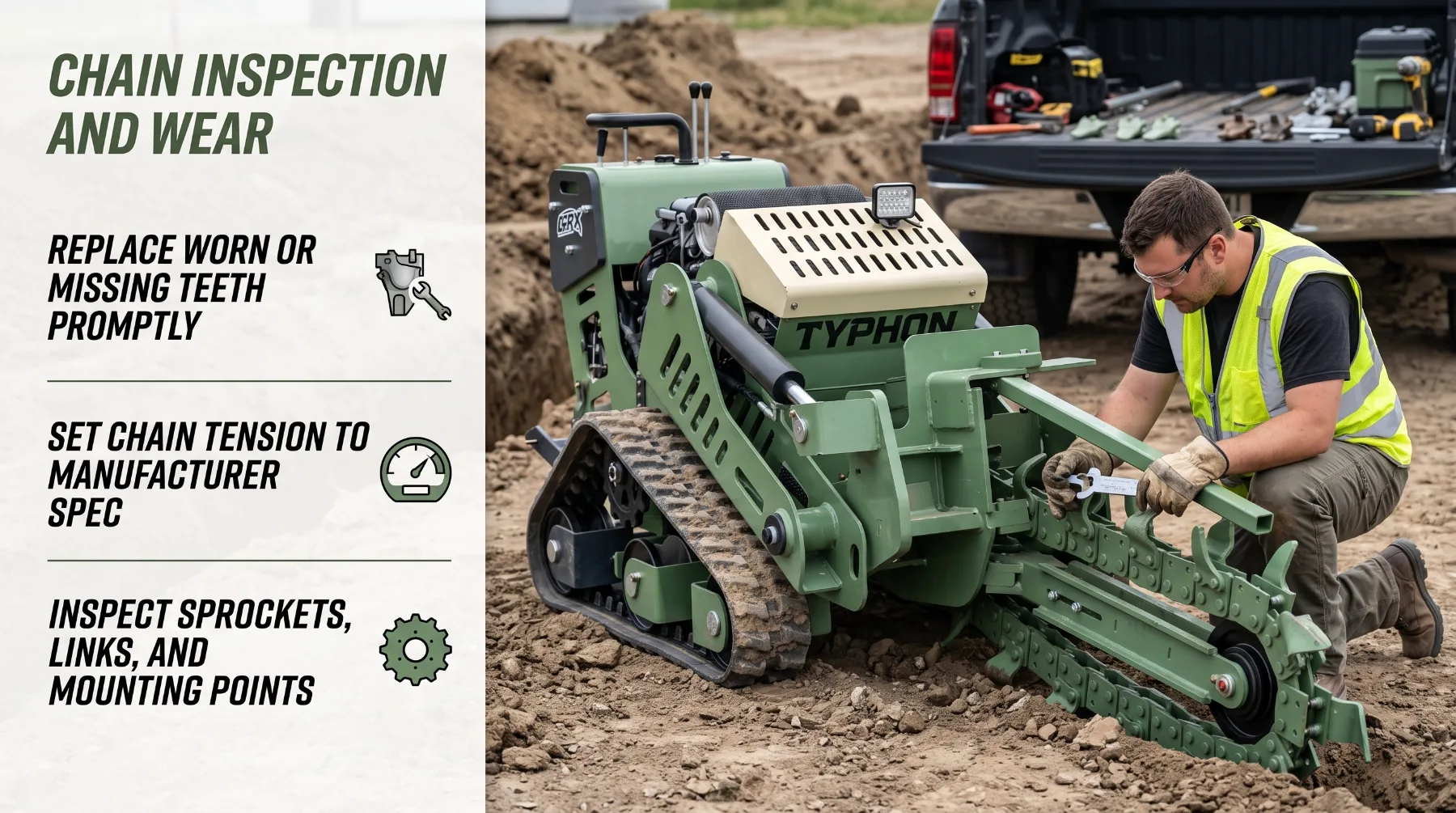
Trencher chains operate directly against abrasive soil, rock, and roots, so regular inspection is important for maintaining cutting performance and avoiding unexpected breakdowns. Before inspecting the chain, shut down the engine, lower the boom to the ground, and remove the key. Check the teeth for wear, cracks, or missing pieces, and inspect the chain for proper tension, damaged links, stretched sections, or seized pins. Also examine the sprockets and idlers for wear or damage and confirm that all teeth and fasteners are securely mounted.
Correct chain tension is equally important because a loose chain can jump from the sprockets, while excessive tension can accelerate wear on the chain, sprockets, and bearings. Replace worn teeth before they wear into the holders, which can make repairs more costly. Follow the manufacturer's procedure when adjusting tension and recheck a new chain after its first hours of operation because it may stretch during the initial break-in period.
Key takeaway: Inspect worn teeth, chain tension, mounting points, and other chain components regularly to maintain cutting performance and prevent unexpected downtime.
Conclusion
Trencher chain design directly affects soil cutting performance, material removal, and trench consistency. Tooth style and arrangement determine how the chain penetrates and carries material, while soil conditions such as moisture, roots, compacted ground, and rock should guide the selection of cup, rock, or combination teeth. Boom and chain dimensions must also match the required trench depth and width, while a controlled travel speed helps maintain consistent cutting and spoil removal. Before operation, contractors should verify underground utilities, inspect the route and ground conditions, confirm the chain and teeth suit the material, and check teeth, links, sprockets, idlers, fasteners, and chain tension. Packed soil should be removed from the chain, boom, and auger, and all inspections or adjustments should be completed with the machine safely shut down. Matching chain design, soil conditions, trench dimensions, and operating speed helps maintain clean, consistent trenches while reducing unnecessary component wear.
Frequently Asked Questions
What does a trencher chain do?
The trencher chain carries cutting teeth that penetrate and remove soil as the chain moves through the ground. It continuously breaks up material and lifts the loosened soil out of the excavation to form a narrow trench. Chain speed, tooth arrangement, and cutting depth all influence how effectively the material is removed.
Does soil type affect chain performance?
Yes. Loose soil, clay, compacted ground, gravel, and rocky material place different demands on the cutting system. Some conditions create more resistance or accelerate tooth and chain wear. Matching the chain and tooth configuration to the soil type can improve cutting performance, control wear, and maintain more consistent trenching.
Why are trencher teeth important?
The teeth perform the actual cutting action, so their design, arrangement, and condition directly affect trenching performance. Different tooth types are suited to different ground conditions. Worn, damaged, or unsuitable teeth can reduce cutting efficiency, increase resistance, and place additional stress on the chain and trencher.
How can chain performance be maintained?
Regularly inspect the cutting teeth, chain links, sprockets, tension, mounting points, and other related components. Replace worn or damaged parts before they affect cutting performance or cause additional component wear. Proper lubrication, correct chain tension, and following the manufacturer's maintenance schedule also help support reliable operation.